Covenant Faithfulness

Understanding Scripture
Psalm 105:1-11, 45b
The psalmist calls us into gratitude...not as a feeling, but as a practice. We rehearse God's faithfulness because we are a forgetful people, prone to anxiety, prone to measuring our worth by what we produce. But God's covenant is not transactional. He is the God who remembered Isaac, who remembered Jacob, and who remembers you. Before Leah ever bore a child, before Jacob ever wrestled at the Jabbok, God had set up covenant love upon a people and would not let go.
Genesis 29:31-30:24
Here is the messy, human heart of the story. Leah, unloved, cast in the shadow of her sister's beauty, finds that the LORD sees her. Each son's name is a prayer: He has seen my misery. He has heard. He will be attached to me. He will praise. And Rachel, too, in her barrenness, cries out until God remembers her. This is not a story about merit. It is a story about God's grace working through fractured, competitive, hurting people to build the house of Israel. In the Reformed tradition, we recognize that God's covenant community is always fuller than our narrow definitions. It includes the unloved wife, the barren woman, the foreign handmaid. The twelve tribes are born not from ideal family structures but from God stooping down to meet people in their pain and walking alongside them, sharing their brokenness.
Matthew 12:38-42
The religious leaders demand a sign. Jesus responds with the sign of Jonah: three days in the belly of the earth, then resurrection life. The queen of the South came from the ends of the earth to hear Solomon's wisdom. The Ninevites repented at Jonah's preaching. And yet, something, someone, greater is here. In Christ, the covenant promises made to Abraham, Isaac, and Jacob find their yes and amen. The sign of Jonah is not a magic trick. It is the paschal mystery: death swallowed up in victory, the unloved and forsaken One raised to build a new family that stretches across every nation, tribe, and tongue.
Reflection
Leah named her fourth son Judah, meaning praise, and it was from Judah's line that the Christ would come. Not from Rachel's beloved Joseph. Not from the expected place. From the overlooked wife, the unloved one, the one who said, "This time I will praise the LORD."
This is the scandal of grace. God does not choose the way we choose. The covenant is not a reward for our lovability. It is the free unmerited favor of a God who sees the invisible, who hears the silent, who builds the Church from stones the builders rejected.
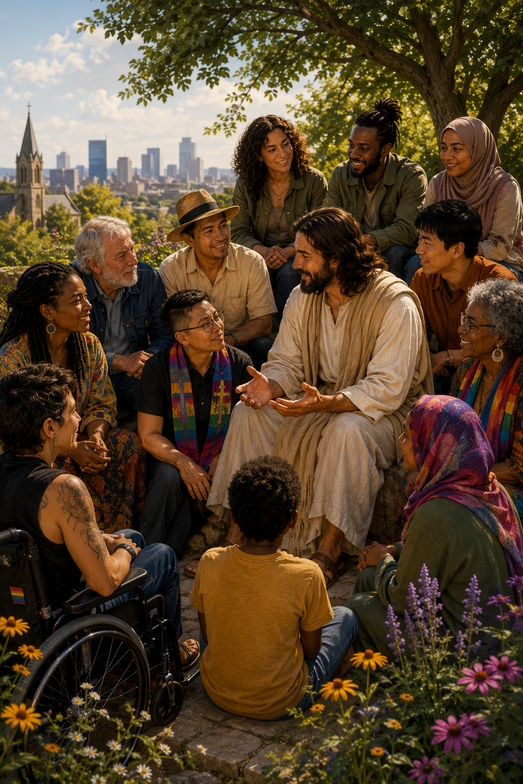
In Jesus, the sign of Jonah, we see the ultimate fulfillment: the Son who was cast into the depths of death, who spent three days in the darkness, who rose not to condemn but to gather. The queen of the South, an outsider, a Gentile, a woman, recognized wisdom when she saw it. The Ninevites, enemies of Israel, repented when they heard it. The covenant is wider and wilder than we imagine. Reformed theology has not always lived this out, and we must confess that sin. But the Scriptures pull us toward a catholic, inclusive vision: one people, from every nation, redeemed, standing together, united in common purpose.
And so, where do you find yourself today?
Are you in Leah's place, working hard, loving deeply, feeling unseen? God sees. The name of your praise may be the very name from which salvation springs.
Are you in the crowd, demanding a sign, waiting for certainty before you trust? The sign has been given. The empty tomb is the confirmation. The covenant is kept.
Are you a sojourner from the ends of the earth, drawn by a whisper of hope? You belong. The covenant that began with Abraham was always meant to bless all the families of the earth.
Prayer
God of Abraham, Isaac, and Jacob, and God of Leah, Rachel, and Hagar, you are the Covenant-Keeper, the Promise-Maker, the One who sees the unseen and hears the unheard.
We praise you that your grace is not a wage we earn but a gift you gave before the foundation of the world. We confess that we have often narrowed your covenant, building walls where you have built a table. Teach us to read the signs rightly: not as demands for proof, but as invitations to trust.
May we, like Leah, find our praise rising from unlikely places. May we, like the Ninevites, turn from our violence toward your mercy. May we, like the queen of the South, come from afar to sit at the feet of Wisdom made flesh.
In Jesus Christ, the greater Jonah, the greater Solomon, the fulfillment of all covenant promise, we pray. Amen.
-
Trinity Parish Presbyterian Church