God Remembers

From Psalm 105: "O give thanks to the LORD, call on his name, make known his deeds among the peoples. Sing to him, sing praises to him; tell of all his wonderful works. Glory in his holy name; let the hearts of those who seek the LORD rejoice... Then Israel came to Egypt; Jacob lived as an alien in the land of Ham. And the LORD made his people very fruitful... He sent his servant Moses, and Aaron whom he had chosen... Praise the LORD!"
From Exodus: "After a long time the king of Egypt died. The Israelites groaned under their slavery, and cried out. Out of the slavery their cry for help rose up to God. God heard their groaning, and God remembered his covenant with Abraham, Isaac, and Jacob."
From Ephesians: "Therefore be imitators of God, as beloved children, and live in love, as Christ loved us and gave himself up for us, a fragrant offering and sacrifice to God. But fornication and impurity of any kind, or greed, must not even be mentioned among you, as is proper among saints. Let no one deceive you with empty words."
Reflection
There is a rhythm in Scripture that we need to hear.
First, the thanksgiving. Psalm 105 opens with praise, with song, with the call to make God's deeds known among the peoples. This is not naïve gratitude that ignores suffering. It is gratitude that remembers the whole story, including the slavery, the alien land, the pit, the prison, and the groaning.
The psalmist remembers Joseph. He does not sanitize it. Israel came to Egypt as aliens. They were fruitful, yes, but in a land not their own. And when the time came, God sent Moses. God chose servants. God intervened. The praise at the end of Psalm 105 is not for an easy life. It is for a faithful God.
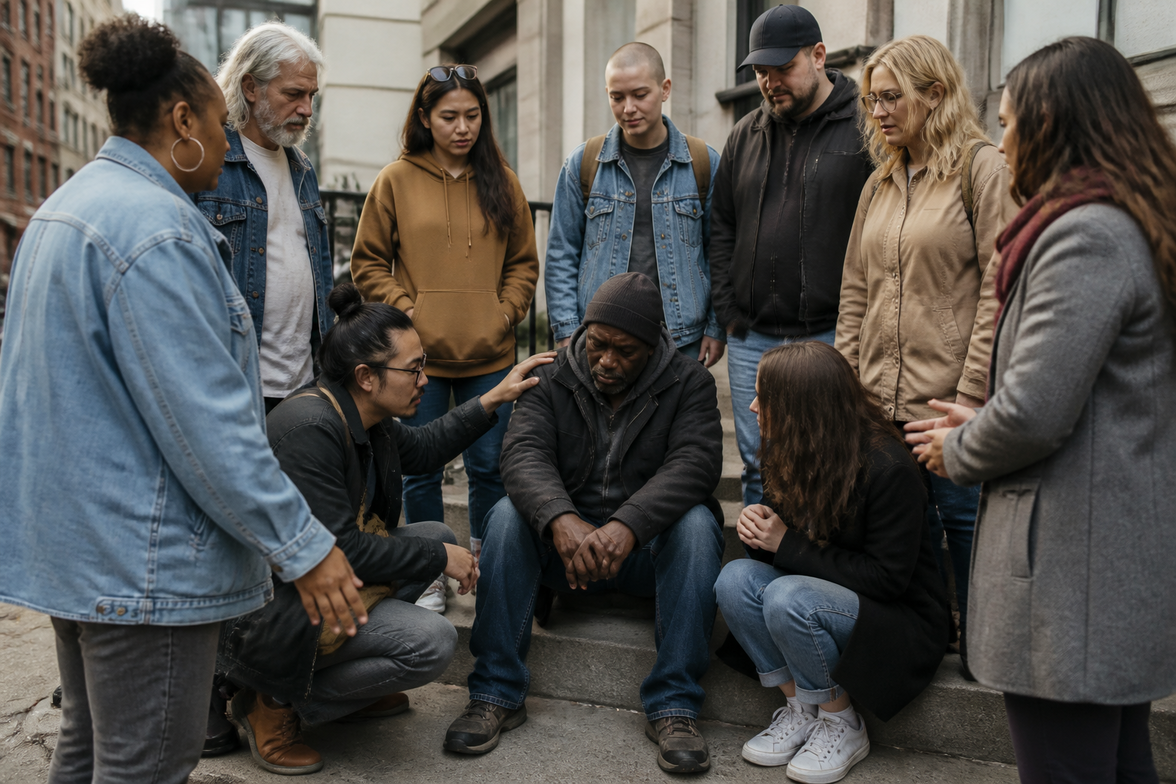
And then Exodus 2:23-24 gives us some of the most poignant words in the Bible. The Israelites groaned. Their cry rose up. And God remembered the Covenant. God did not forget. The groaning of the enslaved reached God's ears, and God acted on a promise made generations earlier. God sides with the oppressed. God hears the cry of the exploited worker, the trafficked person, the one whose labor enriches others while their own life is diminished. God remembers.
But what does it mean for us to remember? The letter to the Ephesians answers. Be imitators of God. Live in love, as Christ loved us. Walk in the way of self-giving rather than self-accumulating. The warning against greed is not prudish moralism. It is the recognition that the same economic systems that enslaved Israel, the systems that extract, that hoard, that treat human beings as commodities, are still at work. And the call is to live differently. To be beloved children who love as we have been loved.
"Let no one deceive you with empty words." In our day, empty words are everywhere. The language of prosperity that blames the poor for their poverty. The language of freedom that justifies exploitation. The language of tradition that resists justice. Paul says: do not be deceived. The wrath of God is real, and it is directed at the systems that crush the image of God in human beings.
The good news is that God's covenant memory is stronger than our amnesia. God's solidarity with the enslaved is deeper than our complicity. And God's call to love; costly, fragrant, sacrificial love...is the only thing that will finally set us free.
Prayer
O God, you remembered your covenant when your people groaned. You heard what others ignored. You chose what others discarded. Forgive us for the empty words that justify greed, that explain away suffering, that call injustice by gentler names.
Make us imitators of you, beloved children who live in love. Teach us to groan with those who groan, to cry out with those who cry out, and to trust that you hear.
Praise the LORD, who remembers, who sends servants, who sets free. Amen.
For Today
Whose groaning have you been trained not to hear? Where might you be complicit in systems that exploit? And where can you offer yourself as a fragrant sacrifice of love? Not in grand gestures, but in the daily choice to live for others?

-
Trinity Parish Presbyterian Church