The God Who Is With Us

Reading the Word
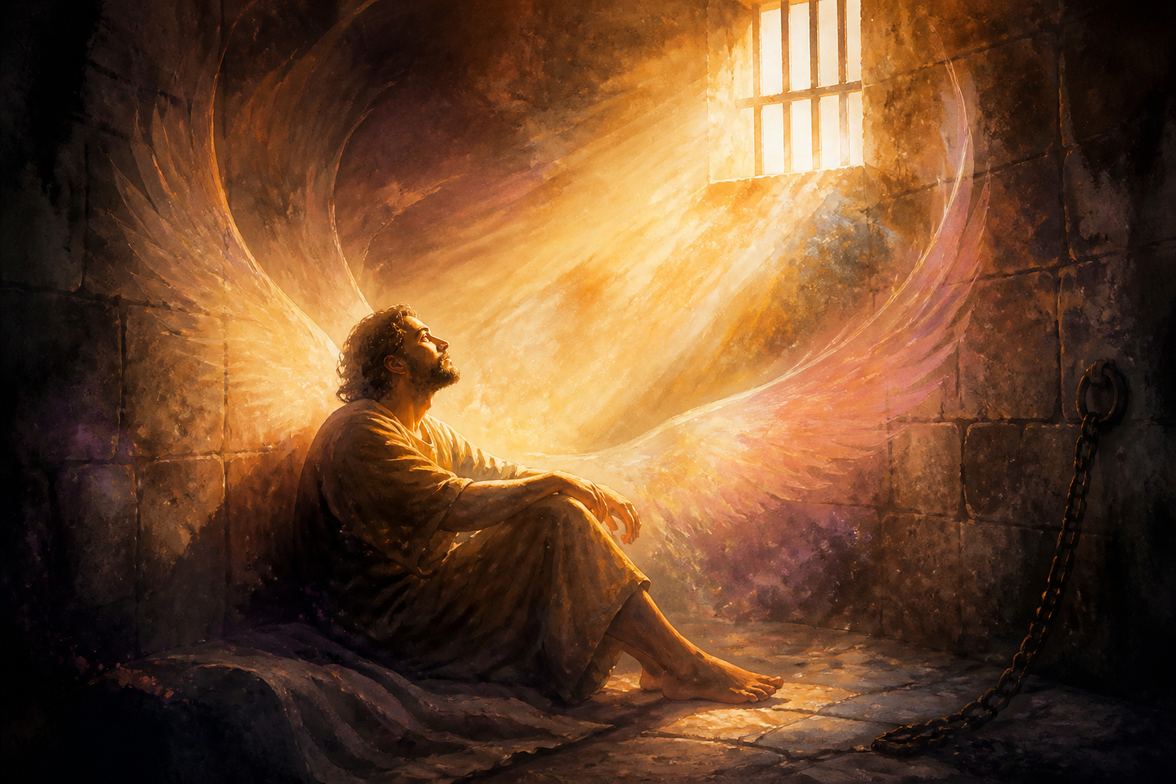
From Genesis: Joseph was sold to Potiphar, an Egyptian. The LORD was with Joseph, and he became a successful man. But Potiphar's wife cast her eyes on him. Day after day she urged him. "How then can I do this great wickedness and sin against God?" he said. She grabbed his garment; he fled. She accused him falsely. Potiphar's anger burned, and Joseph was put in prison. But the LORD was with Joseph there too, and showed him steadfast love, and gave him favor in the sight of the keeper.
From Psalm 28: "To you, O LORD, I call; my rock, be not deaf to me... The LORD is their strength, and he is the saving refuge of his anointed."
From Romans: "Is there injustice on God's part? By no means!... He has mercy on whomever he wills... Who are you, O man, to answer back to God? Shall what is formed say to the one who formed it, 'Why have you made me like this?'... God has endured with much patience vessels of wrath... in order to make known the riches of his glory for vessels of mercy."
Reflection
Yesterday we sat with Joseph in the pit. Today we follow him into the house, and then into prison.
Genesis 39 is one of the most theologically loaded chapters in the whole Joseph narrative, and it all hinges on one phrase that appears three times: "The LORD was with Joseph." In Potiphar's house. In the prison. In the success and in the false accusation. In the favor and in the chains.
This is not prosperity theology. Joseph does not succeed because he is good. He suffers because he refuses to compromise his integrity. The text does not flinch from the injustice. Potiphar's wife lies. Potiphar believes the lie. Joseph's body is violated, first by the grabbing, then by the imprisonment. And still: God was with him.
God does not cause suffering to teach us lessons. We do not believe that prisons are holy places or that oppression is somehow sanctified. What we believe is that God is present in the suffering: not as its author, but as its companion. The God who was with Joseph in prison is the God who is with every incarcerated person today, every falsely accused soul, every body that has been grabbed and then blamed.
And then Romans 9, that difficult, beautiful, troubling passage. Paul is wrestling with the mystery of election...why some seem chosen, and others seem passed over. The potter and clay metaphor has been weaponized across Christian history to justify everything from slavery to eternal damnation. But read carefully: Paul is not saying God creates some people for destruction. He is saying God has endured vessels of wrath with patience to make known mercy. God's patience is the point. The mercy is the point.
Read this through the lens of God's grace. The potter does not discard the clay. The potter reshapes it. And the mystery Paul names is not a mystery of arbitrary exclusion but of God's freedom to work redemption beyond the boundaries we would draw. Joseph, the Hebrew slave in an Egyptian prison, becomes the vessel through whom God saves nations. God does not need our categories of who is in and who is out.
What holds these texts together is the stubborn persistence of divine presence. The rock that is not deaf. The strength that does not abandon. The mercy that endures beyond our understanding.
For Today
Where do you need to know that God is with you, not because your circumstances are good but because God is faithful? And where might you be called to be present with someone in a prison, literal or metaphorical, refusing to let them believe they are alone?
Prayer
O God, you were with Joseph in the prison just as you were with him in the house. Teach us that your presence does not depend on our circumstances being fair.
Be with everyone behind bars today, especially the innocent and the betrayed. Be their strength. Be their shield.
We confess we do not understand your ways. We are clay questioning the potter. But we trust your mercy outlasts our questions, and your presence outlasts our prisons. Amen.

-
Trinity Parish Presbyterian Church