The Rock

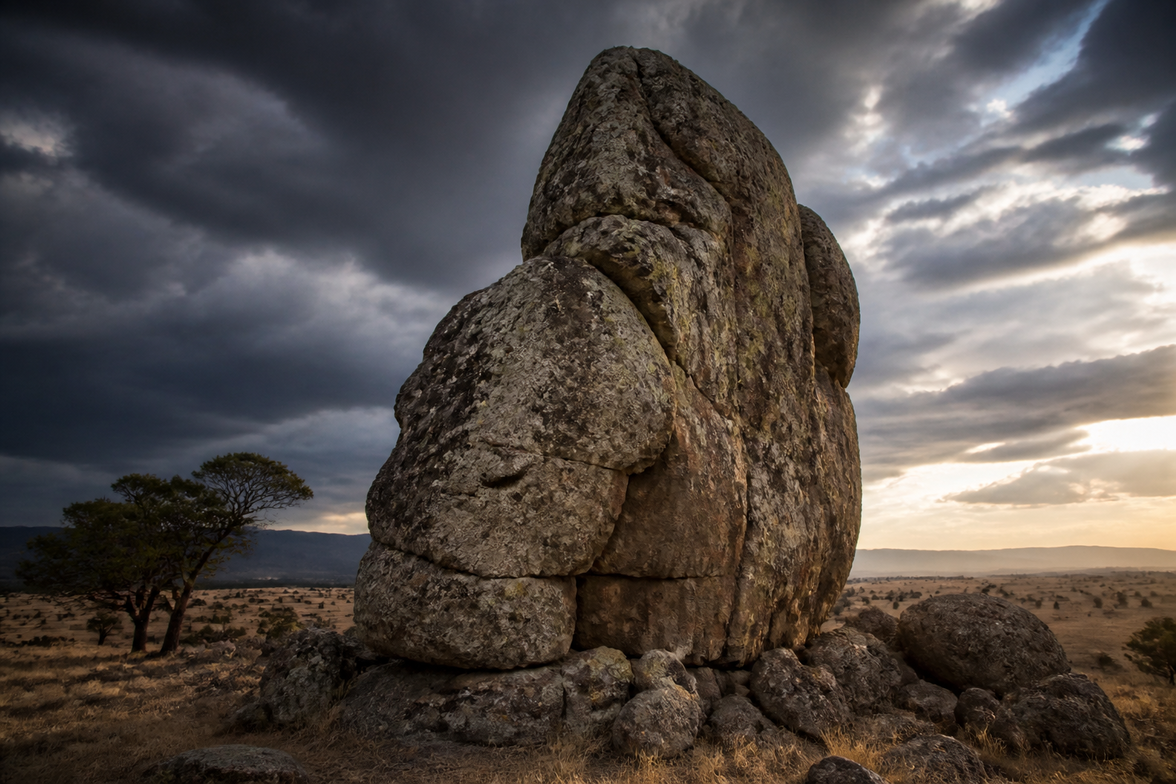
Reading the Word
From Deuteronomy: "You were unmindful of the Rock that bore you; you forgot the God who gave you birth. The LORD saw it and was spurned... He said: I will hide my face from them... for they are a perverse generation, children in whom there is no faithfulness... For their rock is not like our Rock... Is not their Lord our Lord?... The LORD will judge his people, and have compassion on his servants, when he sees that their power is gone. See now that I, even I, am he; there is no god besides me. I kill and I make alive; I wound and I heal."
From Psalm 18: "I love you, O LORD, my strength. The LORD is my rock, my fortress, and my deliverer... With the loyal you show yourself loyal... It is God who arms me with strength... You have given me the shield of your salvation."
From Romans: "O the depth of the riches and wisdom and knowledge of God! How unsearchable are his judgments and how inscrutable his ways! 'For who has known the mind of the Lord?'... For from him and through him and to him are all things. To him be the glory forever."
Reflection
These are not safe texts.
Deuteronomy 32 is Moses' final song, and it is ferocious. Israel has forgotten the God who gave them birth. They have pursued other rocks: foreign gods, political alliances, the security they made for themselves. And God names it plainly: a perverse generation, children in whom there is no faithfulness. The language is visceral. God will hide God's face. God will judge.
Yet even in judgment, there is a strange mercy. God will have compassion when their power is gone. The judgment is not annihilation. It is the dismantling of false power so that true dependence can begin. The wound is not the end. The wound makes space for healing.
Psalm 18 is David's testimony from the other side. He has known God as rock, fortress, deliverer. But he also knows that God's way in the world aligns with covenant: loyal to the loyal, blameless to the blameless. This is not transactional. It is relational. God is not a vending machine. God is a covenant partner who meets us in the kind of people we are becoming.
And then Paul, at the climax of Romans 9-11, throws up his hands in wonder. Who has known the mind of the Lord? Who has been his counselor? The God who judges and heals, who wounds and restores, whose riches are deep and whose ways are unsearchable; this God is beyond our management. From God, through God, to God are all things.
For us, this is both sobering and liberating. Sobering because we cannot domesticate God. We cannot claim God for our politics, our tribe, our certainty. The God who judges Israel is the God who will judge our own complicity in injustice; our forgetfulness of the poor, the worship of our own wisdom, our faith in systems that crush. But liberating because the judgment is not the final word. The wound is followed by healing. The hidden face is followed by compassion. And the mystery of God is not a threat but an invitation; to stop trying to control the divine and start trusting the one whose mercy is deeper than our understanding.
The Rock births us, bears us, wounds us when we forget, and heals us when we return. This is not a gentle God. This is a God who loves us too much to let us destroy ourselves.
Prayer
O God, you are the Rock that bore us, and we have forgotten you. We confess the rocks we have trusted instead: the rock of our own rightness, the rock of our nation's power, the rock of our security built on the backs of others.
You wound us when we forget, and we do not like it. But you wound in order to heal. You judge in order to save. We surrender our certainty that we know your mind. We surrender our need to control your mercy.
May your face be hidden from our idols, and turned toward your servants in compassion. From you, through you, to you are all things. To you be glory. In the name of Jesus, the Rock who was wounded for our healing, we pray. Amen.
For Today
What false rock are you trusting? Where might God be wounding your illusions in order to heal your deeper self? And where do you need to surrender the need to understand God's ways, and simply trust the mercy you cannot control?
-
Trinity Parish Presbyterian Church