The Wilderness Where Streams Overflow

Reading the Word
Psalm 65:8-13
This is a psalm of abundance, but it is not naive. It is sung by people who know the wilderness well. The poet speaks of dawn and evening, of the earth trembling and the mountains standing in awe, before the ground is watered and the harvest comes. Faith is not a denial of hardship. It is a testimony that God has met his people in the wilderness, at the edge of the drought, and made streams overflow where there was only dust. The psalmist sees the green hills and the grain-heavy valleys as participatory evidence, not just that God is good, but that creation itself is invited to join the song.
Genesis 30:25-36
This is the strange, often-overlooked story of Jacob's negotiation with Laban over the spotted and speckled flocks. It reads like folk wisdom meets agricultural trickery: peeled rods, selective breeding, and Jacob growing wealthy while Laban grows suspicious. But beneath the surface lies a deeper truth: God blesses the blessing of the people, even in hostile environments. Jacob does not steal the flocks; he receives them through shrewd, persistent labor, and God multiplies what he has. The covenant promise to Abraham is being fulfilled not through conquest but through the daily, often mundane work of animal husbandry. Blessing is not extracted from others; it is cultivated over time in places where God is present.
James 3:13-18
James asks a hard question: Who is wise and understanding among you? True wisdom is not intellectual performance. It is meekness, purity, peaceability, mercy, impartiality, sincerity. The alternative, "earthly wisdom," is bitter, selfish, ambitious, and demonic. This passage is a direct echo of Solomon's prayer for a listening heart: wisdom is not a credential to wield but a quality of life to embody. In a culture obsessed with status and influence, James insists that the harvest of righteousness is sown in peace by those who make peace. This is the wisdom that comes from above.
Reflection
The wilderness is not empty. The wilderness is where the streams overflow.
We are tempted to believe that abundance is found only in the garden, in the place of ease and familiarity. But the psalmist, the shepherd, and the apostle all say the same thing: God meets us in the difficult terrain, in the contested labor, in the daily grind of making things grow. Psalm 65 does not promise a life without wilderness. It promises that in the wilderness, there will be streams. The hills will be clothed with gladness. The valleys will sing.
Jacob's story is a reminder that we do not have to wait for perfect conditions to receive blessing. Laban changes his wages ten times. The environment is adversarial. Yet Jacob persists. He uses what he has: wood, water, time, and the covenant promise that God is with him. This is not a story of prosperity gospel; it is a story of resilient faith in a hostile workplace. The labor itself becomes a space where God acts. For those who feel trapped in unfair systems, undervalued in their work, or surrounded by suspicion, Jacob's endurance is a strange encouragement: the God of the covenant is not absent from the office, the factory floor, or the gig economy.
James sharpens the focus. The question is not whether you are successful, but whether you are wise. And wisdom, he insists, is not what the world says it is. It is not the viral post, the clever comeback, the accumulation of power. It is gentleness. It is peace. It is the willingness to be peacemakers in a world addicted to conflict. The harvest of righteousness is not sown by those who win arguments but by those who make peace.
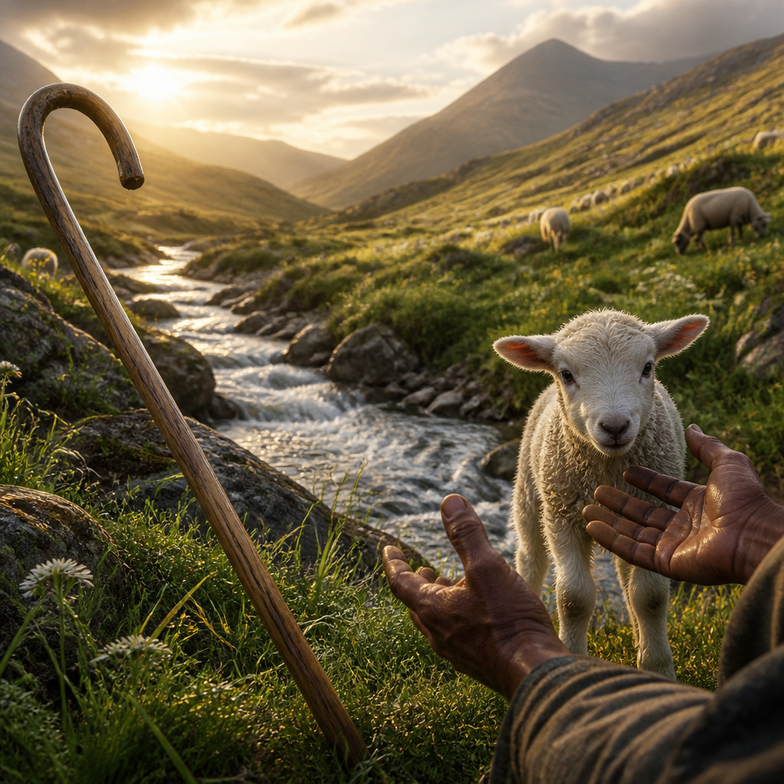
Put these three texts together, and a pattern emerges: God's abundance is hidden in ordinary, contested, peacemaking labor. The shepherd's staff, the farmer's field, the quiet choice to refuse bitterness...these are the places where streams overflow.
The grasslands of the wilderness shout for joy. Not because the wilderness is easy. But because God is there, watering what is dry, blessing what is hidden, and making the ordinary places sing.
Prayer
God of the wilderness and the well-watered valley, we praise you for the streams that overflow in dry places.
You do not ask us to deny the hard terrain of our lives. You meet us there. You water the furrows. You soften the ridges. You make the wilderness shout for joy.
We confess the wisdom we have chased; the bitter envy, the selfish ambition, the need to be right, to be first, to be seen. Redirect our hunger toward the wisdom that is from above: pure, peaceable, gentle, open to reason, full of mercy.
For those who labor in adversarial fields, who negotiate with Labans and feel the rules shifting beneath them, give endurance. Give shrewd persistence. Give the assurance that your covenant promise holds.
For those who are dry, who have forgotten what singing feels like, drench our furrows. Level our ridges. Make us glad again.
We long to be sowers of peace, not seekers of status. We long to cultivate righteousness in the quiet, ordinary work of our days.
In the name of Jesus, the shepherd who leads us beside still waters, we pray. Amen.

-
Trinity Parish Presbyterian Church