Thus Far

Reading the Word
From 1 Samuel: Samuel said to all the house of Israel, "If you are returning to the LORD with all your heart, then put away the foreign gods and serve him only." So Israel put away the Baals and the Astartes, and served the LORD only. They gathered at Mizpah and fasted. When the Philistines heard, they came up against Israel. Samuel cried out to the LORD, and the LORD thundered with a mighty voice that day against the Philistines. Israel defeated them. Then Samuel took a stone and set it up between Mizpah and Jeshanah, and named it Ebenezer; for he said, "Thus far the LORD has helped us."
From Psalm 18: "I love you, O LORD, my strength. The LORD is my rock, my fortress, and my deliverer... With the loyal you show yourself loyal; with the blameless you show yourself blameless... It is God who arms me with strength, and makes my way secure."
From Romans: "Therefore you have no excuse, whoever you are, when you judge others; for in passing judgment on another you condemn yourself, because you, the judge, are doing the very same things... For God shows no partiality. All who have sinned apart from the law will also perish apart from the law, and all who have sinned under the law will be judged by the law."
Reflection
The Israelites gather at Mizpah, and the word itself means "watchtower." They have not gathered to fight. They have gathered to pour out their hearts, to fast, to confess, to put away the gods that have failed them. They are vulnerable. And the enemy sees vulnerability and attacks.
It is a familiar pattern. The moment we try to get honest, something comes for us. The moment we name our need for God, the pressures close in. But Samuel cries out, and God answers with thunder. Not because Israel earned it, but because God is faithful to the cry of the vulnerable.
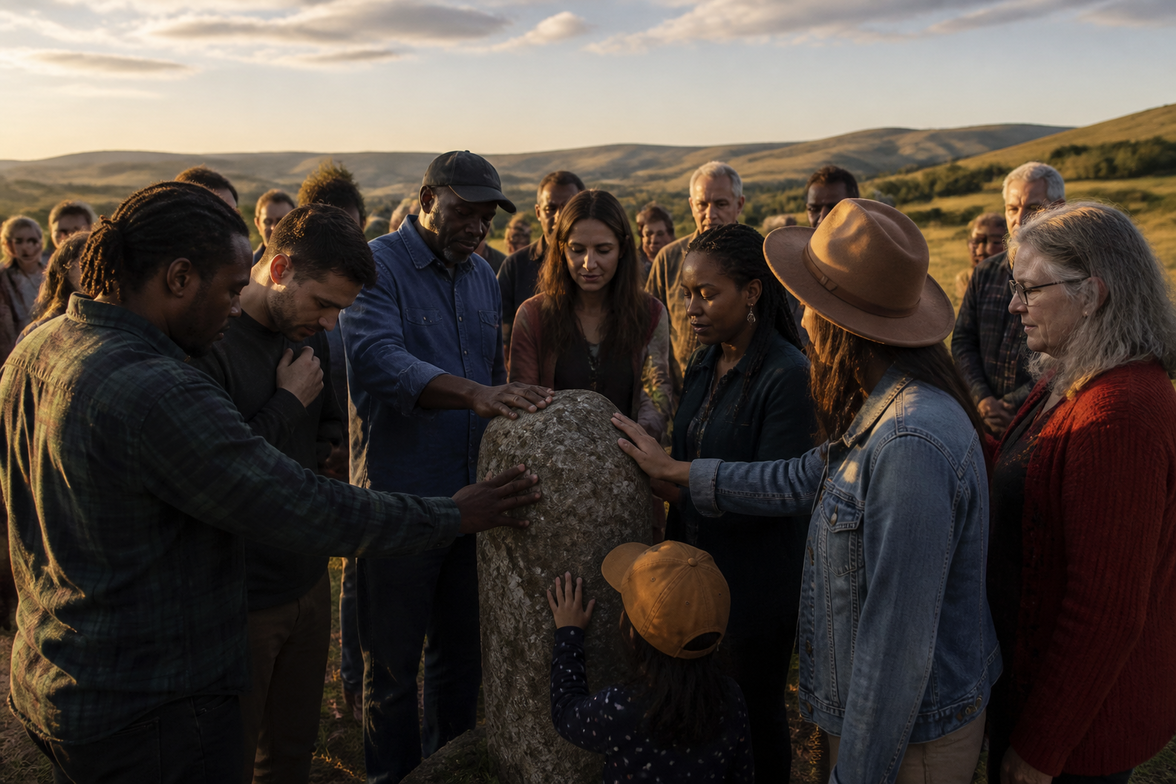
Then Samuel does something profoundly human. He takes a stone. He names it Ebenezer: "Thus far the LORD has helped us." Not "the LORD has finished." Not "the LORD has solved everything." Thus far. Memory as an act of hope. The stone says: we have made it this far, and that is enough for today.
Psalm 18 is David's song of deliverance - the same God who thundered at Mizpah is David's rock and fortress. But the psalm also insists that God is loyal to the loyal, blameless to the blameless. It is not saying we earn God's love. It is saying that God's way in the world aligns with covenant faithfulness. When we orient ourselves toward justice, we find ourselves aligned with the God who is just.
And then Romans 2, Paul's surgical critique of self-righteousness. You judge others, he says, while doing the same things. This is not a generic call to niceness. It is a dismantling of the human tendency to use religion as a weapon against others while excusing ourselves. God shows no partiality. The measure we use will be measured to us.
For progressive Christian faith, this cuts in two directions. First, it challenges those who weaponize faith against the marginalized, who judge LGBTQ+ people, immigrants, the poor, while ignoring their own complicity in systems of harm. Second, it challenges others who might judge their neighbors while failing to examine their own privilege, their own unexamined idols, their own participation in the very structures they critique.
The Ebenezer stone is not a monument to our righteousness. It is a monument to God's help. Thus far. And the way forward is not more judgment but more honesty. Putting away the foreign gods, whatever they are for us, and serving the LORD only.
Prayer
O God, you are our rock, our fortress, our deliverer. You do not show partiality, and you judge with mercy and truth. We confess the gods we have not put away: the god of our own rightness, the god of our political tribe, the god of our comfort at the expense of others.
We confess the judgment we cast while doing the very same harm. Break our self-righteousness open. Teach us to cry out like Samuel, vulnerable and honest, trusting that you thunder on behalf of the humble.
Today we set up our Ebenezer stones: not monuments to our virtue, but memories of your help. Thus far, O LORD, you have helped us. Thus far. Amen.
For Today
What foreign gods do you need to put away? Where are you judging others while excusing yourself? And where can you set up an Ebenezer; a simple memory of how God has helped you thus far?

-
Trinity Parish Presbyterian Church