The Long Memory and the Living Bread
based on 2 Kings 17:13 / Psalm 97:10 / John 6:35

Rev. Anthony "Tony" DeLucia
October 14, 2026
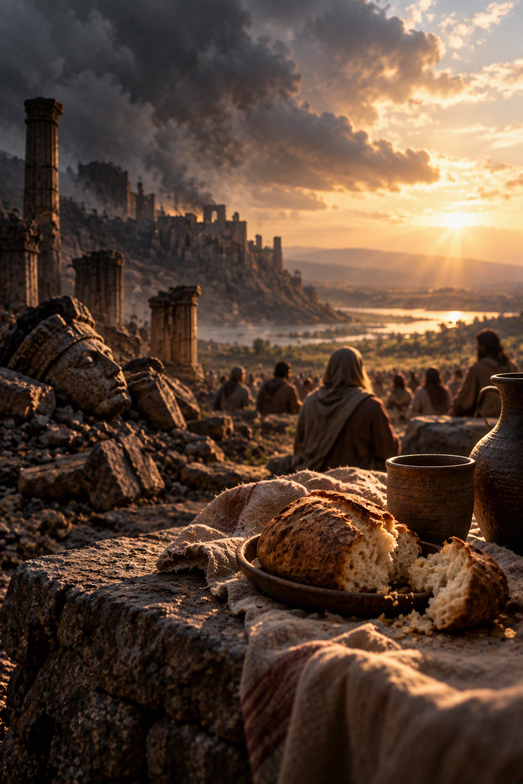
Reflection:
Second Kings is one of the hardest chapters in the Bible to read aloud, and we should not soften it. The Deuteronomist gives the unflinching audit of a nation's collapse: they copied the nations, they served idols, they ignored every prophet and seer who ever warned them. Scripture refuses to explain suffering away or to pretend that communities - even chosen ones - cannot participate in their own undoing. There is a kind of honesty here that justice work requires: long memory, hard accounting, no flattery.
But do not misread it, either. This is a theological explanation written by survivors, not a formula to apply to the suffering around us. Jesus rejects that arithmetic every time he meets it - "who sinned, this man or his parents?" - and he rejects it in this very chapter too. The crowd comes to him asking for bread with the wrong question, tracking him for another miracle like customers chasing a product. He answers the hunger underneath the question: I am the bread of life.
So the two readings hold each other. One keeps the long, painful memory of communal failure - the accounting that keeps a people honest. The other feeds the hungry anyway, without checking whether they deserve it. Reparative justice needs both: the honesty that names what we broke, and the bread we give before anyone asks if we should.
Prayer:
God of the long memory, give us the courage to look honestly at what we and our people have built and broken, without flattery and without despair.
God of the living bread, feed us anyway - before we deserve it, before we ask the right question, and make us bread for the hungry with the same extravagance.
Blessing:
Bring your whole history to the table today - and then be bread for somebody who has not asked correctly.

-
Trinity Parish Presbyterian Church
Office Hours
Contact
© 2026 Trinity Parish Presbyterian Church. All Rights Reserved.
|
Login
powered by
Website Developed by Tithely